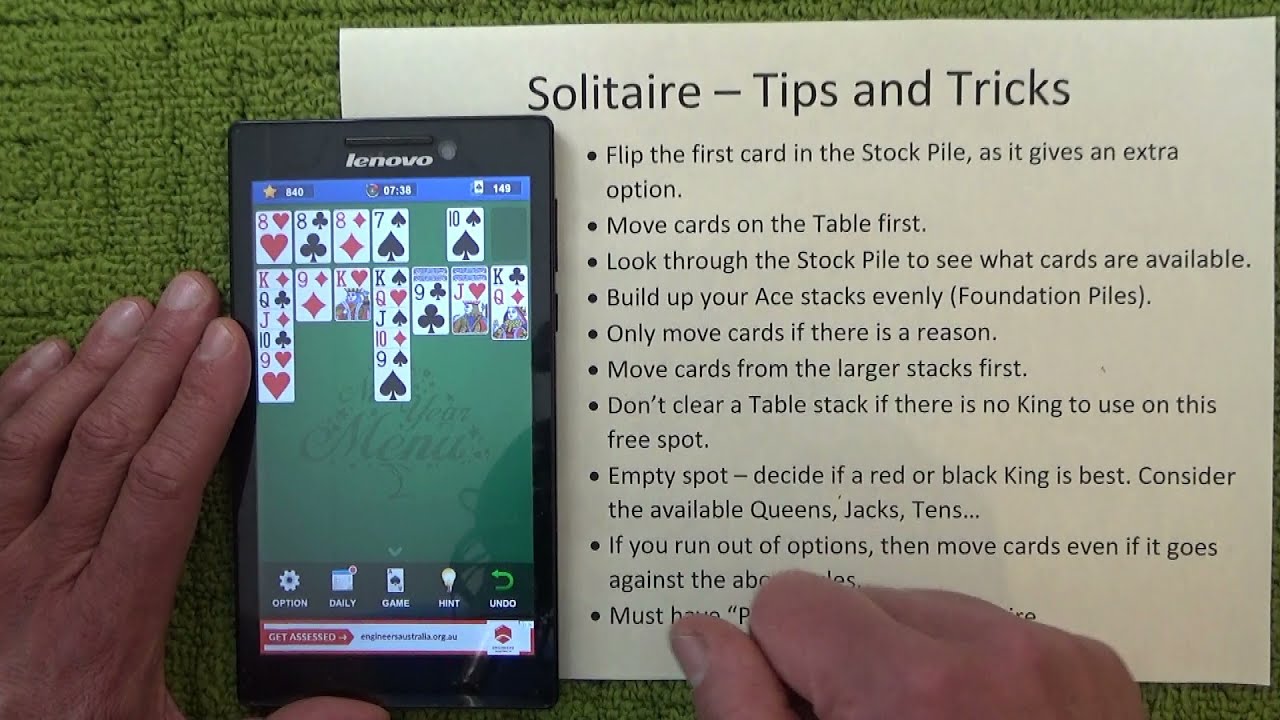
Solitaire looks simple the first time you see it — seven columns of cards, four empty spots waiting to be filled, and a deck to draw from. But anyone who’s played more than a handful of games knows there’s real strategy hiding under that simple surface. The difference between someone who wins one game in ten and someone who wins six or seven often comes down to a handful of habits, not luck.
Here’s what actually makes a difference.
Look Before You Move
It’s tempting to make the first move you see the moment the deal lands. Resist that. Before you touch a single card, scan the whole board — all seven columns, the foundation piles, and whatever’s showing on top of the stock. Solitaire rewards players who think two or three moves ahead rather than reacting to whatever’s immediately in front of them. A move that looks obvious right now might quietly block a better one a few turns later.
Flip Face-Down Cards First
Every face-down card on the board is information you don’t have yet and a card you can’t use. When you have a choice between a move that uncovers a hidden card and one that doesn’t, take the one that uncovers something — almost every time. Early in the game especially, your priority should be turning over as many hidden cards as possible, since that’s what actually opens up your options later in the hand.
Don’t Empty Your Hand Too Fast
Drawing from the stock pile feels like progress. You’re doing something, seeing new cards, moving forward. But it’s easy to draw through the deck too quickly and miss moves that were sitting right there in the tableau the whole time. Before you draw, take a second look at the columns. Is there a card you could move to free something up? A sequence you could extend? Get in the habit of treating the draw pile as a last resort within each round, not a first option.
Treat Empty Columns Like Gold
An empty column is one of the most valuable things you can create in a game of Solitaire. It gives you a place to temporarily stash a card, reorganize a sequence, or set up a move you couldn’t otherwise make. Because of that, don’t fill an empty column automatically just because a King happens to be available. Pause and think about which King — and the sequence behind it — will actually help your game the most. Once that column is filled, you’ve spent a resource that’s hard to get back.
Build Toward the Foundation, Don’t Rush It
It’s satisfying to send a card straight to the foundation pile the moment it’s available, but that instinct can work against you. Sending cards up too early sometimes strips the tableau of cards you’ll need later to keep other sequences moving. As a general rule, try to keep your foundation piles roughly balanced across suits rather than rushing one ahead of the others, and hold a card back from the foundation if you can see it’ll be useful in the tableau a few moves from now.
Pay Attention to Color, Not Just Rank
Every legal move in the tableau depends on alternating colors in descending order. It sounds basic, but a lot of missed opportunities come down to not noticing that a card three columns over is the exact piece needed to extend a different sequence. Train yourself to scan for color and rank together, not rank alone — that’s often where the move you didn’t notice is quietly waiting.
Know When to Let a Game Go
Not every deal is winnable. Some shuffles simply don’t have a solution, no matter how well you play them. If you’ve been stuck for a while with no new cards opening up and no productive moves left, that’s not a failure of skill — it’s the deal. Recognizing that and starting fresh is a better use of your time than grinding against a board that was never going to clear.
Play Often, Not Just Long
Like most games built on pattern recognition, Solitaire rewards regular play more than the occasional marathon session. A few hands a day tends to sharpen your instincts faster than playing for an hour once a week. Over time, you’ll start spotting useful moves almost automatically — which sequences are worth building, which cards to hold back, and when a column is genuinely worth emptying.
The Bigger Picture
None of these tips guarantee a win every time — no Solitaire strategy can do that, since some hands simply aren’t solvable. But applied consistently, they shift the odds meaningfully in your favor, and they make each game more interesting to play in the meantime. For a game people come back to as often as Solitaire, that might be the bigger win anyway.