Brain-Boosting Card Games Similar to AARP Solitaire
There’s a particular kind of satisfaction that comes from a game that makes you think without making you tense. AARP Solitaire players tend to know exactly what that feels like — the quiet focus, the forward planning, the small reward of watching pieces fall into place. It’s a mental workout that doesn’t announce itself as one, which is part of why it’s so easy to come back to day after day. The games below work the same way. Different mechanics, different layouts, but the same essential quality: they keep your brain genuinely engaged without ever feeling like a chore.
Each one is worth trying on its own merits, and rotating between them over time has benefits beyond just keeping things interesting.
FreeCell
FreeCell is one of those games that quietly reveals how much you’re actually in control. The whole deck is laid out face-up from the start — no hidden cards, no surprises — which means every loss comes down to a decision you made rather than a draw you didn’t see coming. Almost every deal is mathematically solvable, so the question is never whether it can be done, only whether you’ll find the way. The four free cells are your main tool: temporary holding spots that let you maneuver cards around sequences that would otherwise be stuck. Use them carefully and they unlock the board; burn through them early and you’ll hit a wall fast. It’s a game that rewards the kind of patient, deliberate thinking that gets better with practice.
Spider Solitaire
Spider is satisfying in a way that’s hard to explain until you’ve played it — there’s something particularly rewarding about clearing a complete suit from the board and watching it disappear. The goal is to build sequences in descending order within the same suit, then remove them, until the table is clear. The difficulty levels are genuinely well-calibrated: one suit is a good introduction, two suits starts to test your planning, and four suits is a serious challenge that will humble most players before it rewards them. The more suits in play, the harder it becomes to move groups of cards around, and the more you have to think several moves ahead just to avoid getting buried. Long, focused sessions suit this one well.
Mahjong Solitaire
Mahjong Solitaire is a useful reminder that the skills behind solitaire — pattern recognition, forward thinking, careful attention to what’s available — transfer well beyond cards. Here you’re matching identical tiles to clear a stacked layout, but only tiles that aren’t blocked on both sides can be selected. That constraint means you’re constantly reading the board, weighing which pairs to remove now versus which ones to leave in place for later combinations. The visual style is completely different from anything card-based, which makes it a good mental palate cleanser, and the strategic thinking underneath is familiar enough that card game players tend to take to it naturally.
Pyramid Solitaire
Pyramid Solitaire has a deceptively simple rule at its core — pair cards that add up to 13 and remove them from the pyramid — but the decisions it generates are more interesting than that rule makes them sound. The question is rarely whether you can make a pair; it’s usually which pairs to make and in what order, because the wrong sequence can leave you with cards you can’t clear. That timing element gives the game a quiet strategic layer that only becomes apparent once you’ve played a few rounds and started noticing how early choices shape what’s available later. For anyone who likes a bit of arithmetic woven into their card play, it’s a natural fit.
TriPeaks Solitaire
TriPeaks moves a little faster than the others on this list, and that’s part of its appeal. You’re clearing cards from three pyramid peaks by selecting cards that are one value higher or lower than the current card — which sounds simple, but creates a chain-building rhythm that can get genuinely absorbing when it’s flowing well. The best runs feel almost automatic, which is its own kind of satisfying. It’s more accessible than Spider or FreeCell, but mastering it — building long streaks, managing the stock wisely, maximizing your score — still takes real attention. A good option when you want something engaging but lighter.
Why Rotate Between Games?
Playing the same game on repeat has a ceiling, and most regular players eventually hit it. Once the patterns become automatic, you’re not really thinking — you’re running on habit. Switching between different games regularly keeps that from happening:
-
Prevents boredom by introducing new challenges and gameplay styles
-
Improves cognitive flexibility by forcing your brain to adapt to different rules
-
Enhances strategic thinking across multiple types of problem-solving scenarios
There’s also something to be said for the way different games target different mental muscles. FreeCell leans heavily on logic and sequential planning. Spider builds patience and the ability to manage multiple threads at once. Mahjong Solitaire trains visual scanning and spatial memory in ways that card games don’t quite touch. Playing all of them means you’re not just getting better at one kind of thinking — you’re developing a broader set of mental habits that hold up across different types of problems.
The cumulative effect over weeks and months is real. Not in a dramatic way, but in the quieter sense that your focus sharpens, your decision-making gets more deliberate, and the kind of pattern recognition these games rely on starts to feel more natural. That’s a decent return on something you’d probably be doing anyway for enjoyment.
Going Deeper on Each Game
The introductions above give you enough to know whether something is worth trying. But if you want a clearer picture of what each game actually demands before committing time to it, here’s a more honest breakdown.
FreeCell in Practice
The first few sessions of FreeCell feel disorienting if you’re coming from Klondike. The fully visible board presents more information than you’re used to processing, and knowing that everything is solvable creates a pressure that randomness usually absorbs — if you can see the answer is there, why can’t you find it?
That discomfort fades quickly. Within a few sessions most players develop a working intuition for how to read the board, which columns need attention first, and how to keep the free cells available rather than filling them up prematurely. The learning curve is real but short, and the game on the other side of it is genuinely satisfying.
One practical note: FreeCell deals are often numbered, which means specific challenging deals circulate among players. Looking up a walk-through for a deal that’s genuinely stumping you isn’t cheating — it’s an education in how expert players see the board differently than you do. Studying those solutions is one of the fastest ways to improve.
Spider Solitaire in Practice
The difficulty jump from one suit to two suits is bigger than it sounds, and the jump from two to four suits is bigger still. Most players spend considerable time at one suit before moving up, and that’s the right approach. The board management skills that feel automatic at one suit are the exact skills you need to survive at two.
At four suits, the game introduces a problem that the lower difficulties don’t fully prepare you for: tableau congestion. Cards pile up in mixed-suit sequences that can’t be moved as groups, empty columns fill up faster than you’d expect, and positions that looked manageable three moves ago suddenly have no clean resolution. Learning to recognize that kind of position before you’re stuck in it is the central skill of four-suit Spider, and it takes real time to develop.
The payoff is proportional to the difficulty. Clearing a board at four suits produces a genuine sense of accomplishment that one-suit completions can’t match. The harder version earns its wins.
Mahjong Solitaire in Practice
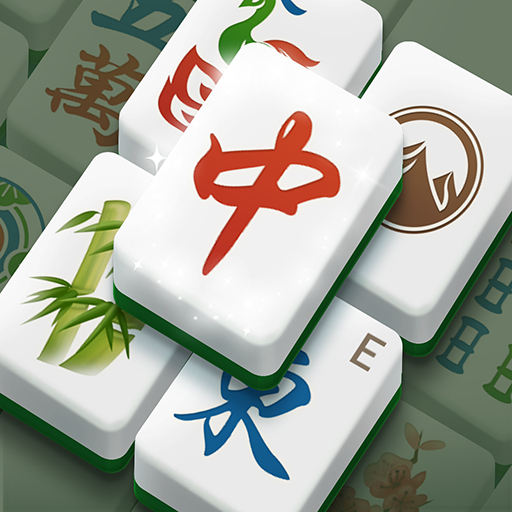
Mahjong Solitaire is the most visually different game on this list, and that difference matters more than it might seem. The tile layouts are three-dimensional in a way card games aren’t — tiles stacked on top of each other, arranged in complex shapes, with dependencies that require spatial reasoning rather than sequential logic.
The learning curve is less about rules — the rules are extremely simple — and more about developing the visual scanning speed to read the board efficiently. New players tend to check tiles one by one, which is slow and misses patterns. Experienced players scan clusters, recognizing accessible pairs almost without consciously processing individual tiles.
Different board layouts also play very differently. The classic Turtle layout is forgiving and good for learning. More complex layouts like the Dragon or Fortress require more advanced planning and are worth working up to rather than starting with.
Pyramid Solitaire in Practice
The arithmetic in Pyramid Solitaire is simple enough that it quickly becomes invisible — you stop consciously calculating and start pattern-matching instead. A Queen and an Ace look like a pair. A seven and a six look like two cards you can’t use together. That shift from calculation to recognition is when the game starts to flow naturally.
The real strategic question in Pyramid is always about access. Cards in the lower rows of the pyramid are blocked until the rows above them are cleared. Planning which pairs to take in which order, specifically to open up the next level, is where the depth lives. Players who just pair whatever’s available tend to get stuck with isolated cards they can’t clear. Players who think a row ahead tend to complete boards more consistently.
The stock pile is the other variable. Each card drawn from the stock can be paired with anything on the pyramid or discarded, and managing when to draw versus when to work the pyramid is a judgment call that affects every game.
TriPeaks Solitaire in Practice
TriPeaks rewards a specific kind of attention that’s different from the other games on this list. The chain-building mechanic means your focus is constantly forward — what comes after this card, and after that — rather than on board management in a broader sense. It’s a more linear thinking style, less about structural planning and more about sequence recognition.
The stock pile management matters more in TriPeaks than the rules might suggest. Drawing too early breaks chains you could have extended. Holding off on drawing while there are still accessible cards keeps sequences alive. Experienced players develop a feel for when the tableau is truly exhausted versus when there’s one more card worth finding before drawing.
Scoring systems in most online versions reward long chains significantly, which creates a natural incentive to plan ahead rather than taking the first available card. Chasing a high score and playing for completion are different games, and both are worth trying.
How These Games Compare to Each Other
If you’re deciding where to start or what to add next, a straightforward comparison helps.
Most similar to Klondike Solitaire: Spider Solitaire. Same sequencing logic, same general structure, same goal of clearing the board. The differences are meaningful but the transition is natural.
Most strategic and skill-dependent: FreeCell. The fully visible board and near-universal solvability make it the purest test of decision-making in the group.
Most visually distinctive: Mahjong Solitaire. Different enough from card games to feel like a genuine change of pace while sharing the same underlying pattern-recognition skills.
Most accessible for beginners: Pyramid Solitaire or TriPeaks. Both have minimal rules and deliver a complete game experience in a short session.
Best for flow states: TriPeaks when a chain is running well. The sequential nature of the game creates stretches where everything clicks and the experience feels almost effortless.
Best for longer focused sessions: Spider Solitaire, particularly at two or four suits. The game rewards sustained attention in a way that shorter games can’t quite match.
Building These Games Into Daily Life
The most sustainable approach to rotating between games isn’t a rigid schedule — it’s having a loose sense of which game suits which mood or time slot, and defaulting to that without overthinking it.
A morning session before the day gets complicated tends to suit FreeCell or a quick round of Pyramid — something that engages the brain immediately without requiring a long warm-up. Lunch breaks work well for TriPeaks or short Spider sessions, games that wrap up cleanly within fifteen minutes. Evening sessions, when you have more time and a slower pace, are natural fits for longer Spider games or a few rounds of Mahjong Solitaire.
None of this is a rule. Some people play the same game every day and find the consistency itself to be part of the appeal. Others rotate constantly and find the variety is what keeps them engaged. Both approaches work. The only thing that doesn’t work particularly well is playing out of obligation — these games should feel like something you want to do, not something you’re maintaining as a habit for its own sake.
A Few Questions Worth Answering
Are all of these games free?
Yes. FreeCell, Spider, Mahjong Solitaire, Pyramid, and TriPeaks are all available in free browser-based versions. No download required for any of them.
Which is best if I only have five minutes?
Pyramid or TriPeaks. Both games can be completed in two to five minutes and feel satisfying even in very short sessions.
Which game has the highest skill ceiling?
FreeCell and four-suit Spider are both candidates. FreeCell because every deal is solvable and losing is almost always a decision error — improvement shows directly in results. Four-suit Spider because the difficulty is high enough that genuinely mastering it takes real time and sustained practice.
Can I play these on my phone?
Yes, all of them have mobile-friendly browser versions that work well on touchscreens.
Is Mahjong Solitaire related to traditional Mahjong?
In terms of visual style, yes — the tiles are the same. In terms of gameplay, they’re completely different. Traditional Mahjong is a four-player game with complex rules and competitive dynamics. Mahjong Solitaire is a single-player puzzle game that shares the tile set but nothing else. You don’t need to know anything about traditional Mahjong to play the solitaire version.
Final Thoughts
If AARP Solitaire is already part of your routine, any of these games will feel like a natural extension of it rather than a departure. FreeCell for pure strategic depth, Spider when you want a longer and harder challenge, Mahjong Solitaire for something visually different, Pyramid for a lighter session with a mathematical edge, TriPeaks when you want momentum and flow.
Each one is free to play online, each one rewards consistent practice, and taken together they cover enough ground to keep any regular card game player genuinely engaged for a long time. Pick one, try it for a week, and see which one earns a permanent spot in your rotation.